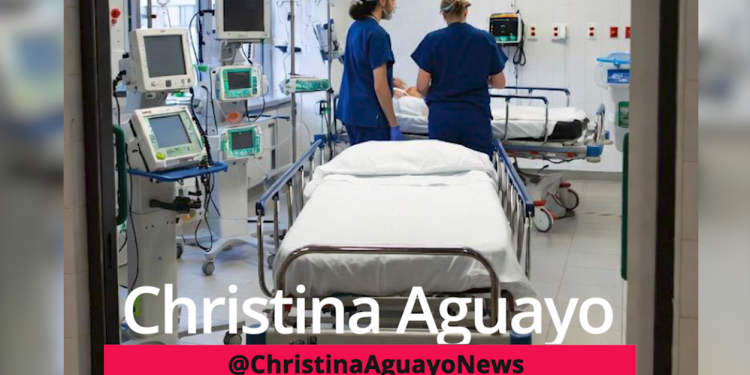
#news Private equity firms are buying up hospitals, & firing staff, leading to a 13% rise in death rates in those Emergency Rooms. Meanwhile, billions in investor gains are paid out.
Okay here’s how it works:
A private equity firm identifies a hospital—often a community hospital in rural or underserved areas.
The firm buys it, but the loans are placed directly on the hospital’s books – and not the firms.
Because of that debt the hospital is forced to make **quick*** cash to cover the interest payments.
Cost cutting measures take place – meaning reduced salaries, staff levels are cut & services are scaled way back
Nurses become overworked, support teams are exhausted, and care level drops.
For example:
Steward Health Care was purchased in 2010, Steward then expanded aggressively but filed for bankruptcy in 2024 with $9 billion of debt, after closing hospitals in Massachusetts and not paying vendors.
The CEO reportedly purchased a $40 million yacht during the cost cutting measures, staff cuts and hospital closures.
Private equity has invested over $1 trillion in health care in the past decade, and now owns or operates around 500 hospitals nationwide, which is almost 30% of all for-profit facilities – and they control 25% of emergency rooms across the country.
A study by researchers from Harvard Medical School, the University of Pittsburgh, and the University of Chicago, Analyzed over 1 million ER visits at 49 private equity hospitals from 2009 to 2019, compared to 293 non private equity facilities.
Here’s what they found:
ER salary spending dropped 18.2%.
Intensive care unit salary spending dropped 15.9%.
Hospital-wide full-time employees dropped by 11.6%.
ER deaths rose 13%
2.7% rise in deaths post operations
25% rise in hospital complications like infections and falls.
In cases like Prospect Medical Holdings, owned by Leonard Green & Partners, aggressive expansion because of the $1.6 billion in debt they racked up – led to service cuts and closures.
Meanwhile, investors pocketed $645–658 million (including $424 million to Leonard Green shareholders) in dividends and fees during service cuts, layoffs, multiple hospital closures ( in Texas, Pennsylvania), and Chapter 11 bankruptcy, which was filed in January 2025.